Category: faith
The Crying Baby Test
A good reminder for me as I go back to Church. It was difficult to manage my seven and three year old at times. I wonder what Church will be like adding Samuel to the mix? My friend posted this article on Facebook and I thought it would be nice to share here.
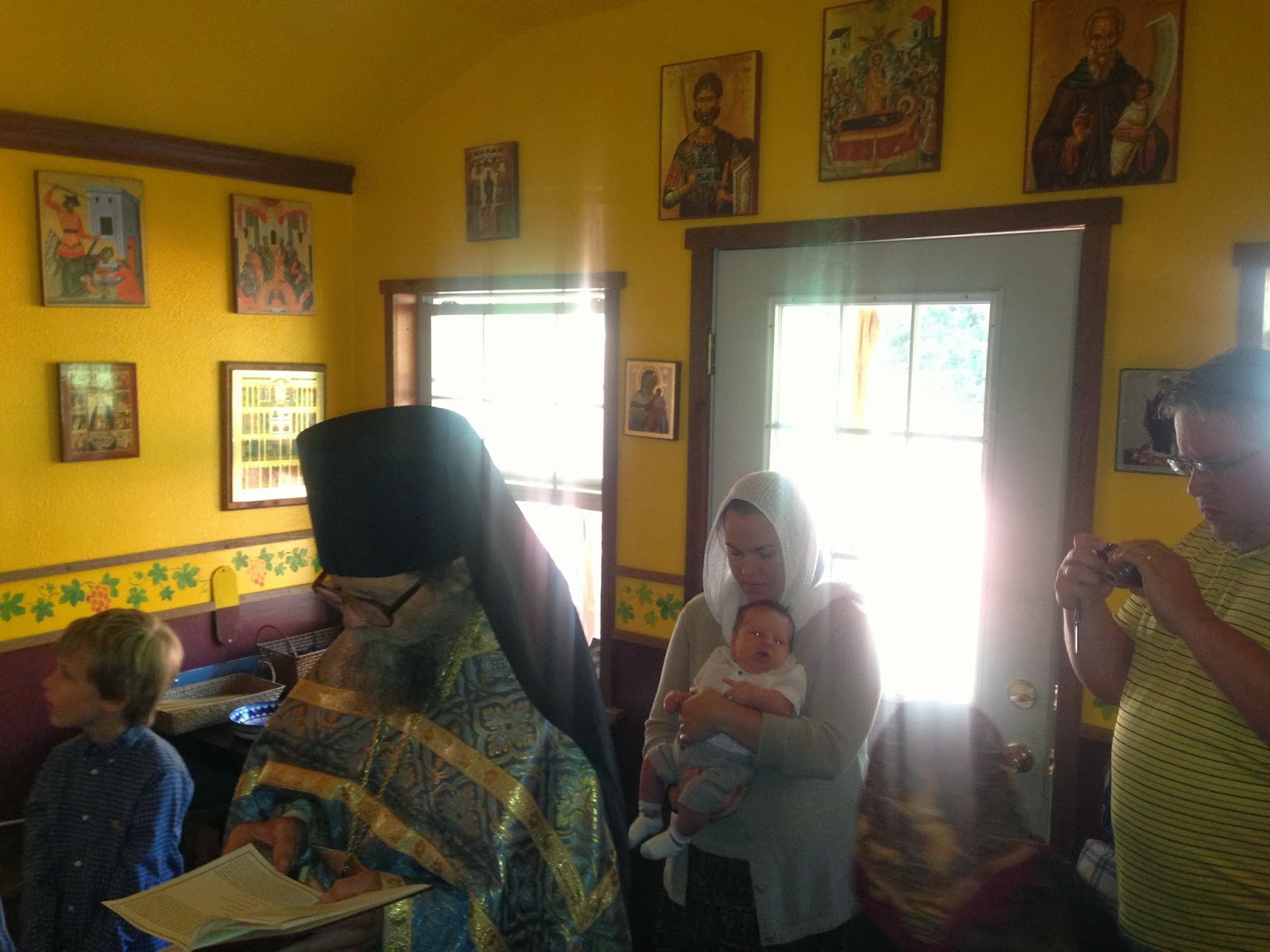
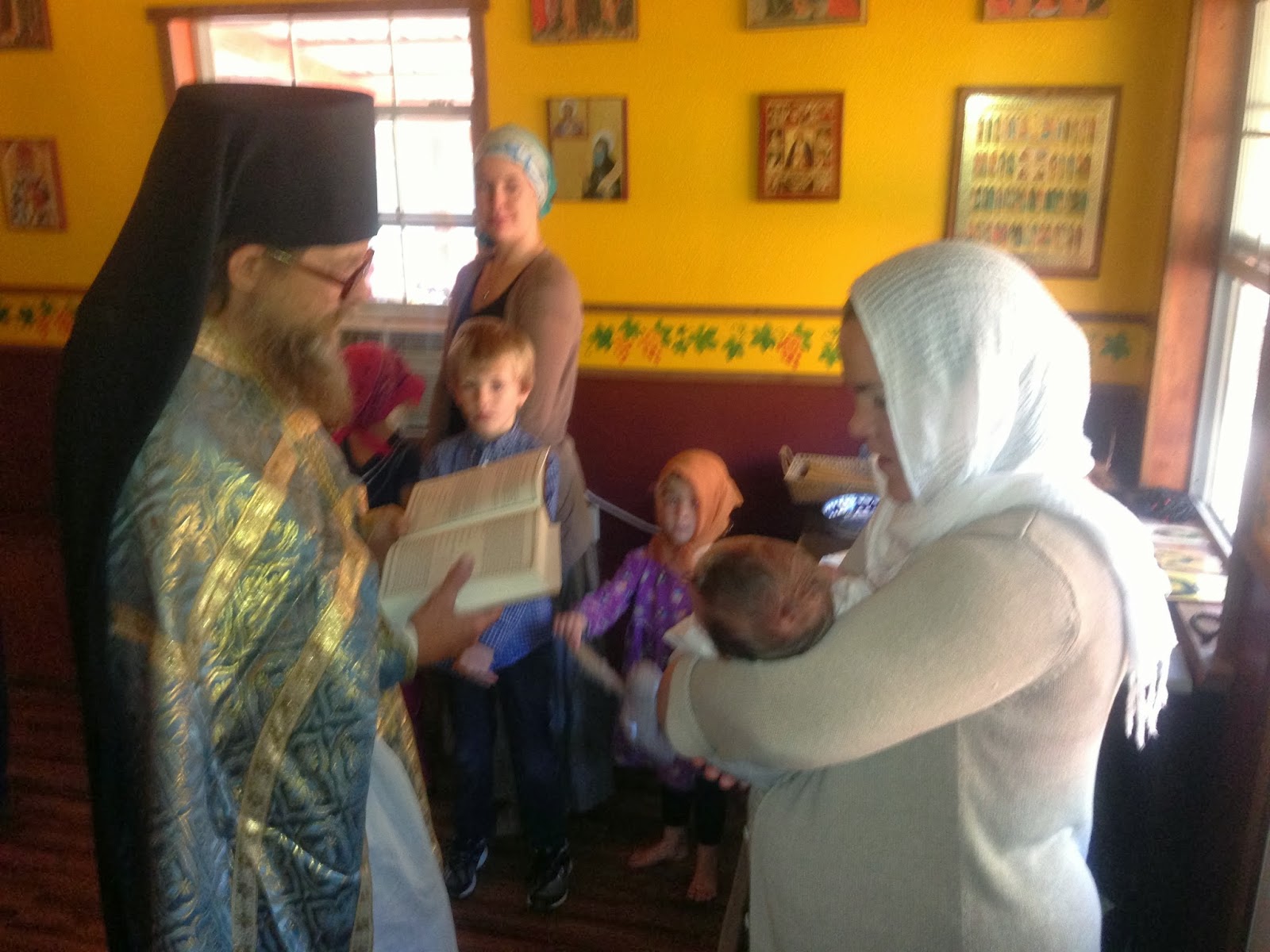
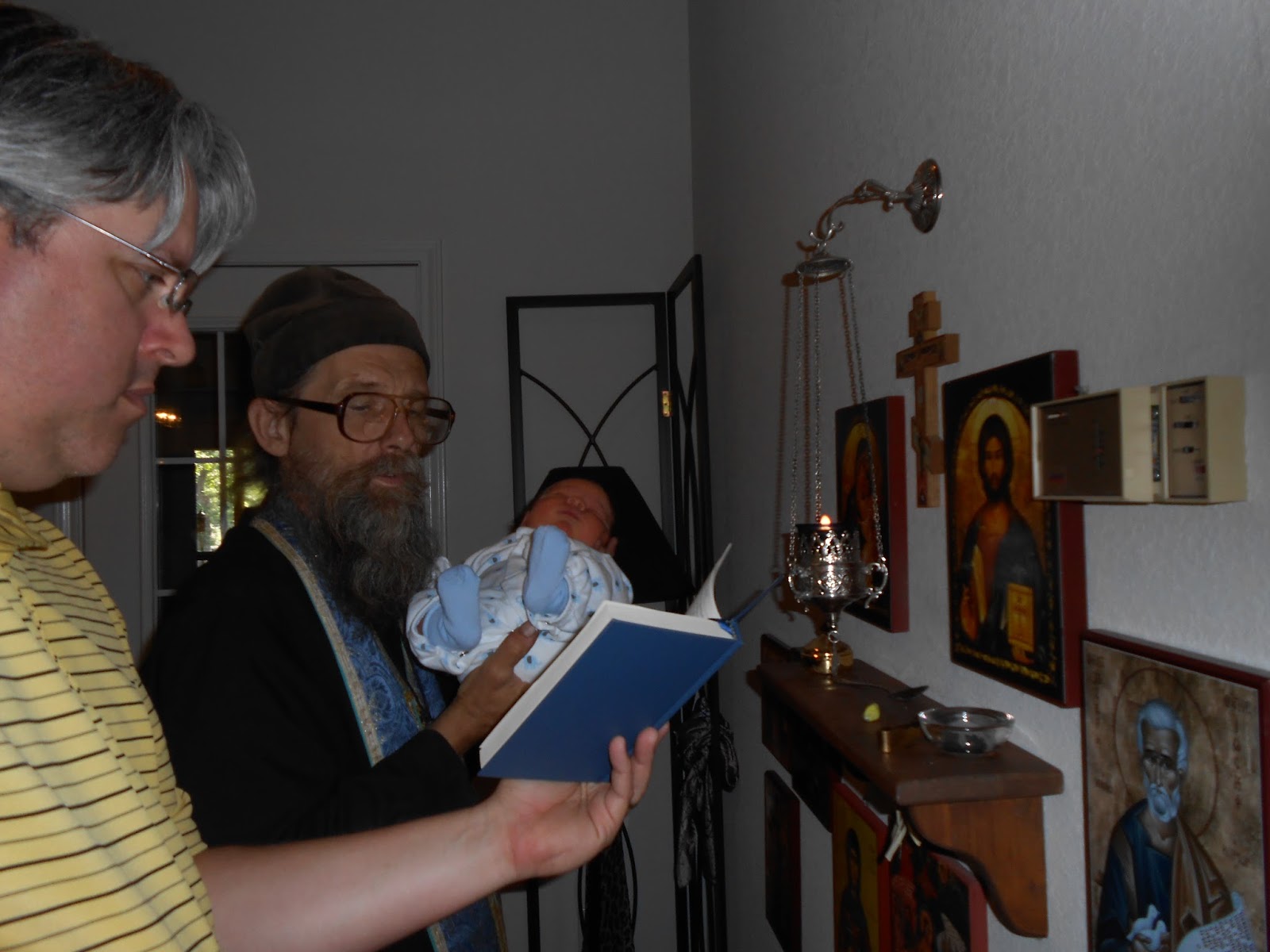
Below are photos of my Churching. I told my husband afterwards, “Well honey, we did it. We got another baby born into this world.” Churching has helped me find closure to a difficult journey, and I am thankful. What a blessing to be Orthodox!
Happy Name Day My Sweet Sophia
Reading, Writing, & Arithmetic
Education as Communication
As my children grow I am concerned about the mind and how it processes information and how it is developing. A child that has no academic skills can scarcely have a decent conversation or express himself properly. Academic education is essential in the arena of communication. To begin the wonderful process of learning to communicate, I concentrate on awakening the mind with great literature, lots of outside in nature discovery, many conversations, playing nursery rhyme games, learning to read independently, and learning to do simple math. I also use dictation as a pathway to writing. I believe in an easy approach, very gentle, and free to adjust to the needs of the young child. If a child’s life is full of all the things I have written about in this series, I believe this experience is quite enough.
This foundation of reading, writing, and arithmetic continues even as my children get older. I feel that if they are reading good books and having great conversations about the books, learning to communicate with sentences, and if they are progressing in their understanding of arithmetic this is more than enough. The extra classes get swept up in all the conversations of life and left for the child to pursue as their interest leads them. I may introduce science and history and art as we go along, but I try to always keep it organic to what we are experiencing in literature or our daily life.
Here are some my favorite resources for reading:
The Ordinary Parent’s Guide to Teaching Reading
This phonics based reading program is absolutely my favorite homeschool resource. The pages of this book are worn, stained, written in, and filled with memories and reminders. I have taught three children to read with its simple and straight forward approach. No bells and whistles, just plain old reading instruction. I look forward to using the same book with Elinor, age 3, starting this year.
Reading Strands
This is published by the same people who offer the Writing Strands curriculum. I do not use the writing curriculum, but the Reading Strands book is a great resource for the Socratic method of discussing literature. It gives great examples of literature conversations, and it also has wonderful reading lists for all ages. I return to this book all the time.
Caldecott Medal Winners
Nothing is better than building a great picture book library in the home. Even my older girls still love a good picture book. I also have added many Orthodox picture books to my growing collection. Reading aloud to young children is a great privilege and joy. This Caldecott list is a great place to start.
Newberry Medal and Honor Books
Some of the greatest books I have ever read were written for young adults. This list is an invaluable resource for those who want to expose children to life changing literature.
The New Lifetime Reading Plan
I bought this book, I think it is the first edition, for myself when I was twenty years old. I have referred to the concept many times. Over a lifetime I plan to read and read well. I use this persuasion on my children. If you are going to read, read well.
A few writing resources:
In this section I have not bought any resources that I think are any better than dictation and copywork. I use the Bible, a child’s own thoughts, lines from literature, and whatever comes to me to help children begin the awesome journey of sentence writing. All writing requires is one well put together sentence after another. As the child grows in confidence and creativity the sentences become paragraphs, and paragraphs become stories. Essay writing comes afterward when a child has had enough life experience to have an opinion, to stake a claim in the world of ideas and argument. This Rhetoric stage requires more instruction. I am yet to have a resource list for this stage. So far, I have used the five paragraph essay, and basic story writing instruction mostly found on the internet.
A few arithmetic resources:
Blocks, beads, M&Ms, pennies, and other fun things to count. Calendars, tally marks, and counting the inventory in the pantry. Colors, shapes, and seeing them everywhere. All this stuff is free and easy to teach a young child. Why buy a curriculum?
Math-U-See
AS the child grows, but is still very young…2nd grade… I like to introduce adding and subtracting. Keeping with my foundation of math in the real world, I like Math-U-See as a spine. It is just what it says, it is math you can see. I use the manipulatives consistently, and I love how it teaches place value. Numbers are abstract and very foreign to the concrete brains of youngsters. This curriculum does a great job of making numbers tangible and fun for young mathematicians.
Key Curriculum Workbooks
My kids have loved these workbooks, and I guess I would pay a lot for them. Fortunately they are very economical. The price is not reflective of the value. Again, the approach is simple and the content is engaging. I have been pleased at how well my oldest daughter learned fractions, decimals, and percents through this curriculum. She even did their Algebra workbooks..can’t complain there either. My second daughter finished fractions and the process was almost painless. I was a little worried with her because she does not like Math all that much. Love these workbooks!
I’m Back…
Well this has been a very difficult recovery for me. After an allergic reaction to a pain medication, a trip to the ER for what turned out to be post pregnancy hypertension, and a more painful recovery than ever I finally feel like posting something today. Before today I could not even set at the computer, and I did not feel like doing anything. Thankfully I have been able to hold my precious new baby boy, and nurse, and snuggle practically non stop. That part is wonderful.
I hope to return to my homeschooling series this coming week. I am also looking forward to getting our homeschool plans finalized and a few things organized. I have high hopes for some cooking and general homemaking. After being practically immobile for 21/2 months, surgery, and recovery complications my body is slow and a little weak, however I do not mind taking it easy. It feels so good to be up and moving and really present. My mom pointed out that instead of surviving my day I could now take things in and let things go out again…I could be at peace after a hard work.
Things can never go back to the way they were before Samuel was born. My work, my schedule, my time, my priorities…they are all changing and adjusting and coming into a new normal. I love it! And I love making a place for Samuel.
As fall approaches and summer fades I can barely write this post without crying. For all those who prayed for Good Strength…thank you. A season has come and gone…it was hard, but I love the fall. My struggle is now my joy…it is joy for my whole family.
Introducing…Samuel Andrew { 10 lbs and 22 1/2 inches }
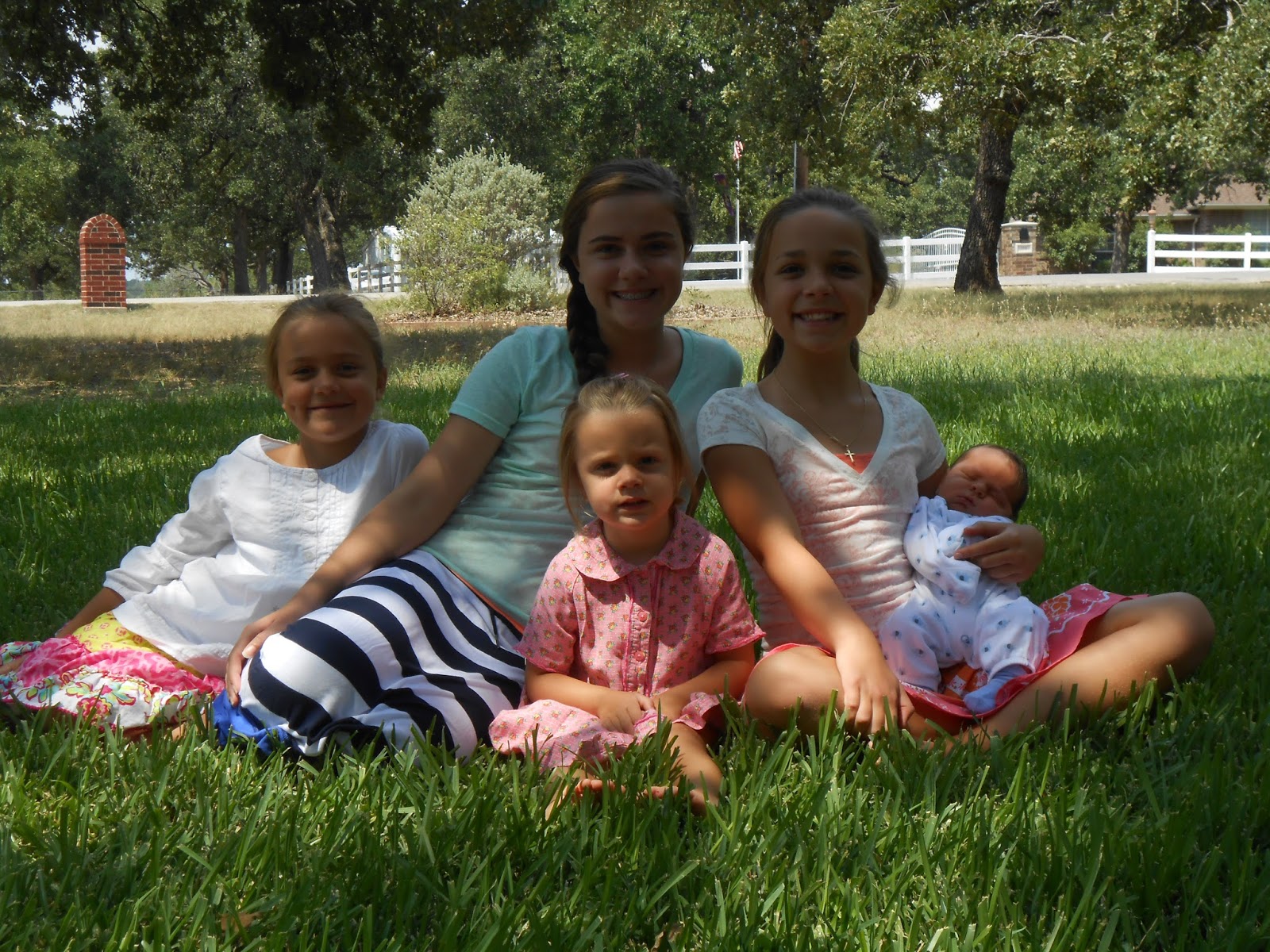
Already out playing with baby brother!
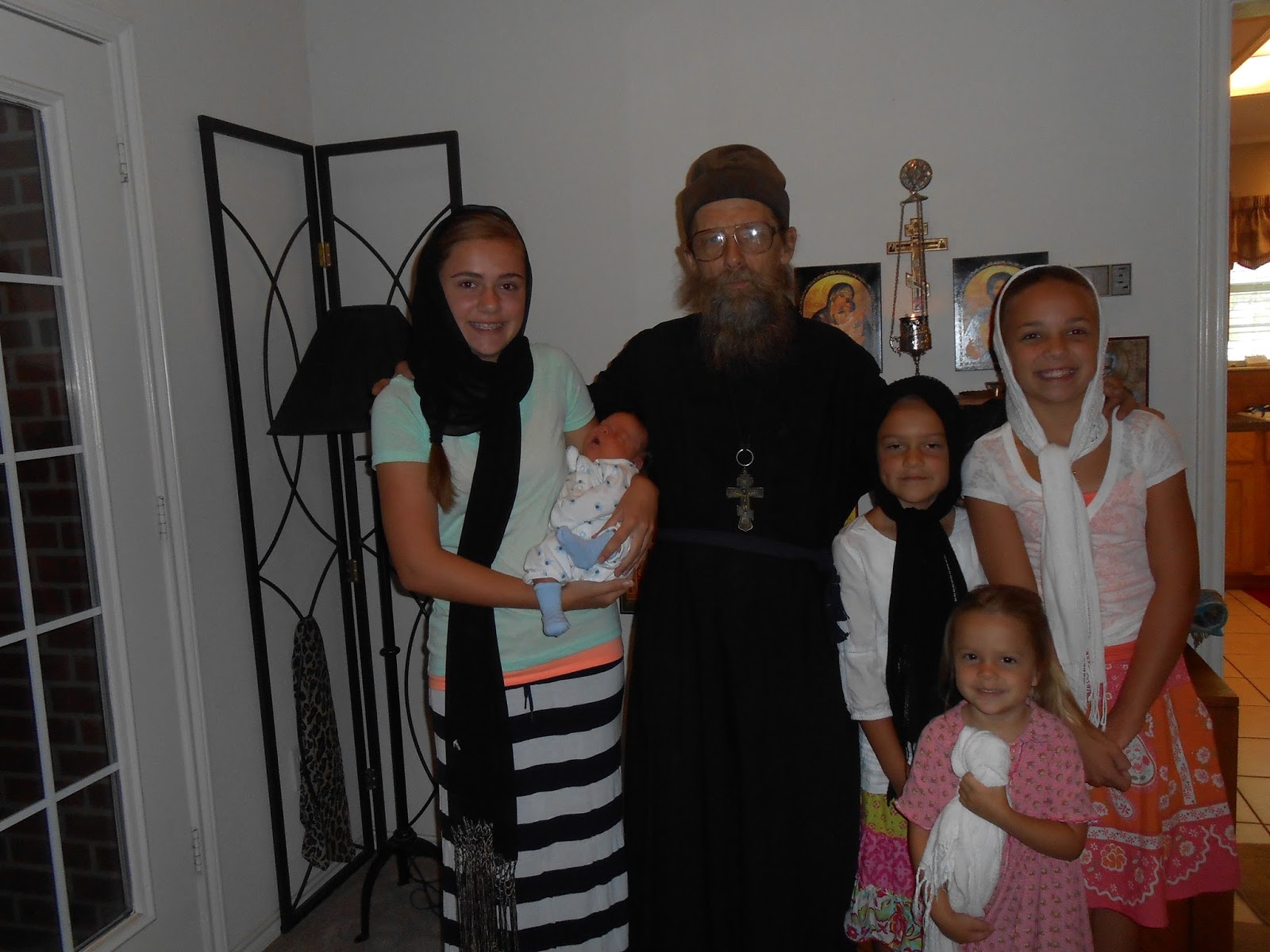
Dad and Father Gregory at the eighth day naming.
Father Gregory and my children.
I can’t sleep…
Birth is a bloody ordeal….
Tonight as I lay wake unable to sleep…my mind is filled with images that I attach to certain memories of how I have given birth…not the natural way…but no less bloody…no less a gift.
Tomorrow my skin and tissue will be pierced and I will bleed and water will flow…and Samuel will be taken from me and take a breath of this air…and I will not get to hold him for very long…and the lights will go out…and the doctor will sew me up…and he will staple me with metal clamps…and bandage me…and the nurses will wash me…and I will wake and feel the wound…it’s not the natural way…but it is still a labor…and it hurts.
My mom was not left with a scar after I was born…but she bled. Her blood poured from the place that makes her helpmeet…the place a young girl becomes a bride…that place that receives life…that just receives. On the day I was born that place gave…it gave birth.
What does it mean for me and Samuel…to birth in such an unnatural way…from my belly…the child never passing through the door that closes all on its own after the gift is given…the belly cannot give birth…men have bellies…what do I call what I and Samuel will do tomorrow…we will do our best…which is not the best…we will do what we can…and we will finish…and we will meet each other on different terms…we will be patient with one another because being deprived of labor makes us a little like strangers…a little shy…the sterile quite of anesthetized pain has robbed us both of the trauma that cleanses…that bonds.
And when we both come to our senses…we will behold one another with sober eyes…and it will all be natural…and we will love…and he will take in the one thing that I can give…the breast…and I will feel for the first time the natural sensation of pain…and it will feel good…it will feel right.
And when the doctor comes to inspect the wound I will hurt…but not my heart…not anymore…not after five…not after five wounds…five scars…five amazing blessings…not after…not ever.
Wanted: Constantinople Catechism
My journey to Orthodoxy was a rocky road. I was a devout Catholic, enjoying the security of certainty. There is something very spiritually cathartic about a Pope, infallibility, and answers to almost every life question. I was sold, and I spent my days trying to find out how I could be a better Catholic. This led to a type of surrender of conscience that at times was very difficult. (Very loving and good Catholic friends would tell me that my struggle in this area was because my conscience was defiled, or not informed.) Not that the Catholic Church ever led me into uncharitable waters, or immorality. But, what did happen to me was a loss of heart.
As I have tried to emphasize in earlier posts, the experiences that I write about are my experiences. I know many Catholics who did not and do not have my experience, and therefore my statement is not a judgement of Catholicism. It is just my story.
After feeling this emptiness for some time, I began to examine the way I was catechizing myself and my children. It was here that I think my true conversion to Orthodoxy began.
I usually hate to give definitions of words as a proof of my opinion, but in this case I could not resist. So here it is, a definition of catechism:
b : something resembling a catechism especially in being a rote response or formulaic statement
In reality, catechism in the Orthodox homeschool curriculum has very little to do with rote answers and manuals. For me it has everything to do with the heart and a progression in virtue. All that being said, I do trust that there is a way to catechize my children.
The Life of the Church:
- Go to Church. The hymns, the homilies, the icons, they all inform and enlighten.
- Follow the Church Feasting and Fasting calendar.
- Participate in the sacraments.
- Pray, Fast, and give Alms.
- Read the Scriptures with my children.
- Memorize prayer, especially the Lord’s Prayer, the Trisagion, and the Psalms.
- Read the Lives of the Saints.
- Keep Icons ever before our eyes and pray with them.
- Have alot of conversations about all of the above.
And that’s all, that is all I need. If I am desperate for a Constantinople Catechism…there it is. This is my belief.
And this is everything I want for my children.
Conversation: The new worksheet.
There are a few kinds of worksheets that I think are worth the ink and tree it takes to print them. One is the kind with math facts on it. (I use grade level math curricula.) Another is a copy work or handwriting worksheet or workbook. I add another to the list when my kids get older. I use parsing and diagramming worksheets in workbooks, or maybe a compact grammar workbook to reinforce writing. But for the most part, most of our learning is done through conversation.
I say conversation is the new worksheet because I think more and more people in the homeschooling world are discovering the benefits of conversation as the best means of bringing about true education. Worksheet in this post is just a symbolic way to represent my opinion of what modern education has become. And by no means do I claim that conversation as a means of education is new. It’s only new in that I, a modern educator, am unfamiliar with this ancient method. I am learning, and I continue to discover new things in this area.
In a house full of girls there is no shortage of words, and sometimes I wish everyone would just be quiet. But, I would not change this very organic way of learning. In a way, conversation is more taxing, but in another sense it is more natural, therefore it is less stressful. Being engaged as a mother is very time consuming and hard emotionally. It requires an active and intentional lifestyle on my part to be able to engage my children in conversations that are instructive and meaningful. I cannot check out, in any way. I, as well as my husband, must be on a journey of discovery and enlightenment. And out of this wellspring comes a dynamic and active learning environment. Ultimately our real life and academic life are not separate. They exist together creating a type of synergy that results in a knowledge of self and our world.
I do not think this kind of learning is possible without the acknowledgement that man is a created body and soul. And this is where I have a problem with public education. When the public intrinsically denies the unseen, when it denies the created nature of both the visible and invisible, I believe it fails in educating children. The conversation of life cannot happen because of this denial.
The goal today is to teach children what to think, not how to think.
Conversation is the way we learn how to think. It is a lifestyle. No subject is separate from the other. Science, religion, mathematics, philosophy, morality, etc. can a should be studied as a whole. And this does not start in high school or when a child matures enough to understand. It is my belief that these subjects are a part of the human experience, from birth until natural death.
The Church acknowledges this type of education through its sacramental understanding of the world. Very young children are Named and Churched. They are invited to the communion cup, to the baptismal font, they are Chrismated and brought into the fold, into the Church. Education is no different. If education is to be true in essence and practice, it must be from birth and it must be sacramental. True education must have the efficacy of grace and mystery, what we Orthodox call sacramental. This is the reason that we as Orthodox Christians are seeking home education as an answer to the nothingness we see in the public arena. We are not mad at teachers, or administrators, or text book writers. We are seeking truth, we desire the true, effective, and sacramental education of our children. In essence we seek Theosis. We desire that what Christ is by nature, our children become by grace.
The ongoing conversation of life is a truly remarkable way to educate children. Any subject, anytime, anywhere, and what is so great is that this type of learning is very organic in the sense that it is the child engaging with his/her world through the wonderful process of reason. Reason is not a Western discovery. It is a God given gift that can be used to become more human, more real, more whole. This is what I define as education.
The best way to converse is to have something to converse about. This is where reading and writing come in, and it will be the subject of a future post. But, for now I just want to say that there is no place to start this conversation. Like, let’s begin with conversation #1. The conversation is circular, we just start where we are. One way that we get great conversations started in our home is through a little game that my cousin plays with his kids. It’s called, “Best and Worst.” At the dinner table each person states the best part of their day and the worst part of their day. This makes for lively conversations, and you would be surprised where some of these conversations end up.
- A truly deep and moving guide for this kind of holistic education can be found in a book entitled Conversations With Children: Communicating Our Faith written by Sister Magdelen. Sister Magdelen shares conversations she has had with children about the Orthodox Faith and Tradition. However, this method can be applied to all subjects, and as she points out in the book, “It [is] risky to select conversations about religion as if it were a separate subject. How we think or act on one issue affects how we think and act on life as a whole, our own life and that of all humanity.”
- Although I would not classify our homeschool method as unschooling, I do use unschooling methods in our homeschool approach. One book that I love is The Unschooling Handbook: How to Use the Whole World as Your Child’s Classroom.
- Also, this talk given by Dr. James S. Taylor is very good, and worth a listen. Poetic Knowledge and Education. He also has a book entitled Poetic Knowledge: The Recovery of Education that I have not read yet, but it is on my list.
- For a detailed illustration of this method Plato’s Republic is a good reference. In it, Socrates uses conversations to bring about enlightenment.
My goal for this homeschool year concerning this method:
- Keep a daily record of conversations I have had with my children. I think it would be a beneficial reminder on days when I panic that I am not doing enough. It will also help me to be at peace with not using a grading system.
Almsgiving: Sharing, Chores, and Blessings
I married when I was eighteen, and four days later my husband and I hopped on a plane headed for Honduras, Central America, to work as missionaries on the small island of Roatan. My parents and two brothers were not far behind us, all of us together, stepping out in faith to serve God and others the best way we knew how. In the days leading up to the missionary journey my mom and dad planned a beautiful wedding for my husband and me, and they also systematically sold or gave away EVERYTHING they owned. I was still living at home, and I saw my room empty, a little at a time, one trinket and garment at a time. Cars, furniture, dishes, appliances, tools, all of it…gone. When everything was done my family was driven to the airport by a close family member with everything we owned packed in six suitcases. I stored my wedding gifts, but everything else was gone. Slade and I had two packed suitcases to our name.
I cannot exactly describe the impact that this emptying had on me. When I read the stories of the saints who gave away all they owned I can sort of relate. Of course, my journey did not continue in this way, but I do know what it feels like to own practically nothing. I also know what it feels like to give away a life, to leave a certain kind of life for one that is completely different all because you want to serve God or someone else. It’s not as romantic as you may think.
I remember those early years of marriage, and sometimes now when I set in my beautiful home filled with pretty things I cry. I cry because I know the joy of giving far outweighs receiving, and I wonder if my knowing makes me more responsible. What I have seen with my eyes, people who are joyful in severe poverty, people who love God, living in a cardboard shack on the edge of the dump, uneducated people who love their children and keep dirt floors impeccably clean and worship even though they cannot read and wash there clothes by the sea and share even though they have nothing and struggle with preventable illnesses and walk to church and try to give strangers the pictures off their walls just because they mentioned it was pretty. See, my crying is not because these people I saw were suffering, it is because they were joyful.
In America our excess makes us sad. However, the Church provides for the spiritual bliss of both the rich and poor. Almsgiving connects these two peoples in a very genuine and real way. One gives and the other receives only to discover that the giver receives and the receiver gives.
So, how do we open this world up to our children? I have narrowed down three areas that I think make it introduce and train children to be almsgivers. Please remember that we are all sinners, and the things I share are the deep beliefs and convictions of my heart. That does not mean that we live this out perfectly, it only means we are trying and failing and trying again…over and over and over.
Three ways I teach heartfelt almsgiving to my children:
- Radical Sharing
- Daily Chores
- Counting Our Blessings
Radical Sharing
From the start a child enters the world as a part of a whole. He is a part of a family, a part of a community, a part of the world. Children are not autonomous, they do not have the ability to act freely or care for themselves. They arrive with needs, and they must be cared for. A child literally could not survive without the giving of others, they are dependent. In this way a child is always in a humble position, and it is in this way that I think children should remain in their place. It is the same position we are all in with God. We are completely dependent on his care and therefore we should approach God in humility and repentance, this is the Orthodox way. Children are not to be disrespected, neglected, or treated unkindly. Exactly the opposite; they should always be loved and love sacrificially. However, in the secular world the example of Christ and His love for us is not the model. What we have today is child worship, along with a strangely mixed cocktail of neglect, abuse, overindulgence, and hate. Yes, I said it…hate. This world is becoming less and less friendly toward children, all the while claiming to put children first. Its a weird dichotomy that I have not figured out. But, enough of my soap boxing. Back to sharing.
It is with this belief that I approach sharing. If something belongs to my children it is because my husband and I gave it to them, or some other person gave it to them. For example, why is it wrong for children to share bedrooms and toys, as if this giving will harm the child’s identity or self-awareness or boundaries. This kind of thinking is not Christian. The bedroom and toy do not belong to the child, they do not own the bedroom or toy. These things are blessings, gifts, luxuries that took the sacrifice of another to provide. To share them is the very heart of almsgiving. If a person realizes that ALL he/she has belongs to God, the act of almsgiving becomes and remains joyful. However, if the mantra is, “Mine, Mine, Mine” the joy of giving is clouded and diminished.
Through sharing children learn to let go of their iron fist grip on “stuff.” It is difficult to teach a child to share, and even more so as they grow older, especially if as a youngster they were spoiled and overindulged. Sharing is the first step to learning how to give. What can children share? Everything. Toys, space, bedrooms, clothes, food, pets, attention, and much more. Older children can share as well. Their privacy needs increase, and I always keep that in mind. However, the teen years can become a nightmare if the the young adult is not required to share. Parents must discern and let the teen grow, but we do not have to accommodate selfishness and pride.
To teach a child that he/she is a part of a whole, a part of a family, and that the very nature of family demands sharing is crucial to the child’s ability to learn and grow in almsgiving. Over time I believe that the joy of sharing can and will be discovered. Sharing proclaims to the world that all we have belongs to God, therefore all we have can be shared.
Daily Chores
Work is a true act of giving, especially if it is done for the sake of the whole. When children are brought up to share their stuff, it is easier for them to share the load. Think about it. We adults have to share in the work load of this world. There are many things that must be done, and we all have to do our part. And sometimes we have to do for others because they are unable to do for themselves.
The home is a great place to learn this. When children are given a share in the work load they become aware of the needs of the whole. I especially see this when chores outside of cleaning their own room, or making their own bed, or things that solely pertain to them are given. When the chores began to include folding laundry that doesn’t belong to them, or washing dishes that they did not use, or dressing a younger sibling, or cleaning a bathroom that everyone uses my children began to mature and become more giving.
Right now I am completely dependent on my husband and children to care for me and this house, and honestly we have not had alot of drama over this. Sure there have been days when everyone feels stretched to the limit and attitudes reflect that. But, all in all I am amazed at the level of skill and diligence that my girls have demonstrated. They are also compassionate and loving when I know they are tired and stretched. Not always, but most of the time. The house has kept running, we are a team, we are all part of a whole. When someone on that team is unable to do for themselves it is up to the others on that team to carry the burden. To me this is family. To me this is almsgiving.
Soup kitchens and shelters and mission trips and volunteering are chore oriented, but they have glory attached to them. This kind of almsgiving is definitely crucial and meaningful, but small things are where we learn to do things in secret. Like changing your little sister’s dirty diaper and cooing with her while you do it. Nobody is watching, only God sees, and this is true almsgiving. When a child’s heart is broken in the right way his/her service at the soup kitchen or shelter is genuine. It is based on previous training that has shaped a worldview of service, sharing, and burden baring. I saw this over and over again in the years my husband and I were youth pastors. The children who were trained at home were the ones who cried their eyes out on mission trips when confronted with poverty and disease. They saw things differently, and they worked the hardest. I try to train my children to bare a portion of the family burden, to see their value in their service to others. In this way work and chores can be joyful.
Count Our Blessings
Is it really a blessing to be a part of a family that practices radical sharing and daily chores? Well, I think so, but sometimes my kiddos don’t see the benefit. That’s ok…they are children. However, I sense a sort of contentedness in my children that many kids lack. They are not little saints, always happy to work or share, but down deep I can see true happiness. I see a kind of self esteem that is genuine and peaceful. I really think, without them knowing it, my children have learned true happiness through sharing and work. They know that they are valuable, not as objects of worship, but as individuals with certain God-given talents and abilities that contribute to the health and happiness of the whole.
Serving others is the key in helping children feel connected and not alone, it makes them feel that they are needed and matter to others. My kids matter to me outside of what they do for me, but I know the look in their eyes when they serve me a glass of ice water when they know I cannot make it myself. I know how they bounce around when they have completed their chores and everything feels orderly and peaceful and good. I have seen them take a younger sibling in their arms to comfort and console, and when the younger snuggles up and settles down the older feels loved and valued and cherished. This is the joy that a giver receives. This is the love that the receiver receives. It is the foundation of all relationship and fellowship. It is communion lived out.
Almsgiving is the recognition of true blessings and sharing those blessings with another person. All the sacrifice and work and sharing become the joy of the giver’s heart. I would like to end this VERY long post with something I wrote on another post:
Almsgiving is not exclusively about money…in its deepest since it is about mercy, a kind of pity that breaks the heart of the giver. It just so happens that money is a readily available resource. But one is reminded of the apostle’s words, “Silver and gold have I none, but such as I have give I thee.” Even those who have no currency are still expected to give what we have been given and give with a broken heart full of mercy and joy, and that is not a religious mandate or a sterile practice. It is life giving.
If the foundation is laid, giving money will be as natural as cleaning a toilet or feeding a pet. It all belongs to God, everything. Our time, our talent, and our treasure. And this is what I call Home Schooling. It all begins at home.