organizing · pregnancy

C-Section and Mama’s Hospital Bag

Packing my hospital bag for a scheduled C-Section has been fun this week.  Some of these items are essential for a natural birth also, but after four c-sections I can recommend that some of these products be in your bag.
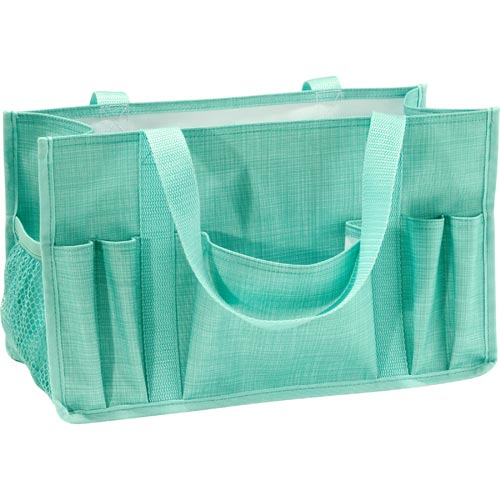
  • My cousin recently gave me this little tote from Thirty-One, and I thought it would work great for the hospital.  I packed all my toiletries in the handy little bag for quick access and for great organization.  With a c-section I will stay in the hospital for at least three days and two nights.  That means that when the nurses finally unwire me completely I will be allowed to shower.  Oh how I look forward to that first shower to wash away all the sticky surgical stuff.  It’s wonderful!  So, after a trip to Wal-Mart to pick up small toiletries: body wash, shampoo/conditioner, deodorant, toothpaste/ tooth brush, mouthwash, and lotion I organized everything in this little tote.  I am excited about how compact it is and hoping it will make things a little easier in the bathroom. 



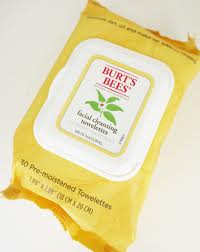
  • Also packed in the tote are pre-shower essentials: lip balm, belly butter, facial wipes, and flushable sanitary wipes.  The lip balm is wonderful when I come out of recovery and my lips are so dry.  I also like to wash my face after surgery and freshen up a bit before the family joins me. (I also brush my hair.)  A few hours later I put belly butter on my wrinkled, sore, and parched belly.  It feels so good to have the baby delivered, and it feels wonderful to moisten the skin that has been stretched to its limits.  I get HUGE when I am pregnant.  The sanitary wipes are for day two when I am not yet able to shower, but I would like to feel clean and comfortable.


  • After my shower I usually change out of the hospital gown into a comfy pair of modest pajamas.  I bought these online at Wal-Mart, and I have washed and wore them already.  They are the most comfortable pj’s I have ever worn, and they do not look or feel cheap.  I may buy another set in a different color.  Did I mention they are also nursing pajamas?  They are my favorite buy so far.  I will pack two extra pajama sets, one for day three and one for accidents.


  • Another Wal-Mart online score I found was a pair of very comfortable nursing bras.  I like to wear soft bras before my milk comes down.  It keeps me supported and the dropping is less painful.  I even wear a bra at night, and so the bra has to be comfortable.  I love this bra.  It is soft, but supportive, just what I was looking for.  And the price was great!



  •  I also pack about four pairs of granny panties.  These wonderfully big and comfortable panties are a must after surgery.  They DO NOT touch in all the right places.  I bought a size larger than I would have if I were my normal size.  The hospital supplies mesh panties that I love, and I usually save my cotton panties for the day I go home.  I pack extras just in case, or if I have an accident.            

    Some other goodies to take along:

    • A small make up bag with only the essentials: a pressed powder, tinted lip gloss, blush, mascara, and eyelash curler.  Yes, call me vain, but I do think I look refreshed and relaxed when I put on my basic face.
    • A brush and elastic bands for my hair. ( I put these into the tote.)
    • A robe.  I am not sure that I will need this.  It is very hot, and the hospital supplies an extra gown to put on backwards for the walks in the hall after surgery.
    • A small traveling icon set.
    •  Electronics: camera, video camera, and phones.  I have fully charged all these devices, but I am taking along charging cords just in case.
    • A very loose and comfy going home outfit.  I was so inspired by the blue polka dot dress that Princess Kate wore when presenting her son to the world.  So, I decided to wear a pretty maternity sundress that I have as my going home outfit.  I packed a little pair of espadrille shoes to go with it.  
    • A nursing cover.
    • My own feminine products for going home.  I will use what the hospital provides until I get ready for the trip home.  I bought the overnight product because they looked large and comfy.
    • Socks with grips on the bottom.  My first steps in the days after surgery are very unsteady, and I feel secure with grips.
    • A strong support maternity belt.  I have a condition called diastasis recti, and this garment has helped me function.  This is by far the best maternity support belt I have ever used.  I am taking it to see if it will help postpartum.


      I am getting so excited for the surgery day.  I used to get down about having a c-section, but I am older now.  I just pray for safety for me and baby, and I am thankful for the modern technology that allows me to have babies.  What have you packed in your hospital bag?  Or do you have a suggestion that I must know about?  Happy Packing- I know I am having fun!


faith · family

Liturgcal Life: July

JULY 2013
July has been an eventful month.  There is been rain for the drought here in Texas, a short period of record breaking low temperatures, and now heat that can fry an egg on a sidewalk.  My family continues to care for me with such care and patience, and I am grateful to the bottom of my heart.  I have learned a few things about myself during this time that I hope I keep with me always.  Will I ever be the same again?  I pray not.  I do not have to do it all.  This season of lack in my spiritual and liturgical life has made me see myself in a deep way, and how much love and compassion God has for those who are weak.  Bottom line, I look at things wrong.  He truly is strong when we are weak.  My kids pray, attend services, and do special projects.  However, the reading list is mine.

What I am reading:
Mystical Theology of the Eastern Church
The Gnostic Gospels
The Waning on the Middle Ages

Special Prayers:

  • All prayers said at our altar are special at this point because we have slacked off due to the morning and evening routine being so different and difficult.  Our efforts are a team effort in this area.  I cannot even stand, so someone pulls a chair up for me.  Elinor is off schedule, so she usually lays in the floor and whines until I make her sit in my lap and just be quiet.
  • We are all saying special prayers for the birth of Samuel and for his health.  We pray for me, and for Good Strength to get through this very difficult physical struggle.
  • We also prayed for the upcoming marriage of my oldest brother, and we continue to pray for the birth of my niece Emmelia who belongs to my youngest brother and his sweet wife. 
  • We continue to pray for my great aunt Marga who went to her rest this month.  May her memory be eternal.

Special Services:

  • The Betrothal & Crowning of my brother Joshua to Allison my precious new sister.  The wedding was beautiful.
  • Service at St. Arsenius Hermitage.
  • Service of Holy Unction for me and baby Samuel.

Special Projects:

  • Preparing the house for a new baby.  My husband has taken over the nesting duties, and I love watching him fold tiny sleepers and onsies.  He has done everything with the help of the girls.  I am a blessed Mama.

faith · homeschooling · learning

The Living Church Calendar

After completing my daily prayer plan, I then proceed to the Church calendar.  Until this year we have only tried to fully participate in the Major Feasts and Name Days.  This year I am adding additional feast days to the calendar.  For this step I first gather my supplies:

  • A Church Calendar for the current year.  I use the one that our parish offers for free.  For the new year I look up an Orthodox calendar online. (This also helps for moveable feasts.)
  •  My family calendar that has already been filled with possible extra-curricular activities. 
  • Curriculum planner that also includes a monthly block calendar.
  • A pencil with a good eraser.
  • Some scratch paper to jot down ideas that come to me while I am planning.
  • My laptop for quick references to my favorite websites for inspiration and direction.
  • Two copies of my daily prayer plan.

Then I dive in.  Here is the process:

  1.  Place all the Major Feasts on my calendars and block off days that I know we will need for Church services, crafts, field trips, activities, etc.  Here is where I use the websites for inspiration and ideas.  What are other Orthodox mothers doing during these days?  I search the web, and I use a book entitled  Making God Real in the Orthodox Christian Home.  I also have used The Children’s Garden of the Theotokos…what wonderful ideas for me, a beginner.  During this process I jot down ideas on my scratch paper with the dates, and a few activities we might do.  When the days get closer I finalize my plans and buy supplies if needed.
  2. I look at one of the daily prayer plans and label it Feast Days and decide what time of the day I can best fit in these activities.  I usually go for the morning, in place of our academic schedule, usually 10 AM to 12AM.  However, this year we are going to have a more fluid schedule due to the hours my two older children will be on the computer for academic classes.
  3. Then I go to my calendars and pencil in all the name days.  Name day activities usually happen in the evening when daddy gets home, maybe with some daily preparation.  That allows us to bake a cake or shop for a special meal.  Often we go out to eat for a name day, and that is very special.  My goal this year is to try and save any stories or special prayers on this day until dad gets home.
  4. This year my two older children are going to have a set academic schedule.  Therefore, I will have to be very flexible and plan according to what day of the week it is.  I have already adjusted wake times, 6th hour prayers, and lunch to accommodate their daily schedules.  The school that they will be attending is St. Raphael Orthodox Online Homeschool.  This is the first time I have ever had outside help with homeschooling, and I am super excited.  With the new baby, a toddler, and a pre-independent reader I am relieved to have the help.  This year feast activities will be at different times depending on which day of the week it is.
  5. Now that I have the Major Feasts and Name Days put into the calendar, then I go to the special saint days we would like to add.  This year I am using Reading Through the Year of Grace from St. Theophan Academy as a guide.  I will add web articles and books when I can find them for my older kids, but they seem to like picture books and crafts.  We will see.  I put down the saint day on my calendar, and then plan to touch on that saint sometime in that week.  When I finalize my calendar, I hope to offer it here as a PDF file on the free resources page.
  6. As our parish and the hermitage where we go make service times available I also put those on my calendar so that I do not plan alot of school work, major projects, or outside activities on that day.  I ALWAYS have conflicts in schedule, but that is where I discern.  I do not always get to attend services, but we try to make an effort.  This year has been really difficult due to a difficult pregnancy.

Websites to Help:
The Twelve Great Feasts
God is Wonderful in His Saints

  How do you fit in the feasts and saint days?  Are you feeling inspired?  Share with us, and Happy Homeschooling! 

faith · family · homeschooling · parenting

The Church Calendar: This is not a history lesson.

You may be asking, “What in the world does she mean?  Aren’t the events on the Church calendar historical?”  Well, yes and no.  While all of the saints and events on the Church calendar are historical, in the sense that they did actually exist and historical events did take place, are they not also a part of our present and our future?  In a real way all of the feasts and days of commemoration are present and real.

I accepted this wholeheartedly when it came to Christ, He is eternal and the I Am.  The Trinity has no beginning or ending.  However, when it came to accepting the living presence of the saints that was another story.  We converts have a rough go of it. (I was raised Protestant, and later converted to Catholicism, only to find my home in the Orthodox Church).   And this is where I began to see the wonderful nurturing and loving aspect of the Church.  It’s as if we’ve been invited to a great feast.  In fact, the Church uses the word feast. Everyone who enters the Church is in essence entering the Great Paschal Feast, the resurrection and life of Christ.  All the saints who have gone before us reveal Christ.  And we homeschooling mothers get to open up this wonderful life of the Church, which is the life of Christ to our children.  How awesome is that?

However, this realization is not as easily walked out, and I continue to grow in this area.  Making the decision to center our homeschool plan around the Church calendar is one that I have struggled with.  Here’s why.  I may have to adjust our academic load. I have found that if we attend services,  participate in the readings, hymns, and commemorations,  and read books that correspond with a certain feast or saint we have to let go of some of my academic ideals.  We cannot do it all, and that is just the truth of it.

In the process of renewing my mind in this area, I have discovered that the pride of life is a major weakness and area of sin in me.  I am not saying that everyone who follows a strict academic rule is prideful.  Absolutely not.  This is just something I struggle with.  It is simply my desire for my children to succeed, perform, stand out, be smart, get into a great college, win spelling bees, and be affluent that drives me.  I envision that success in this world is what will make them happy (or better, what will make me happy), and so I fashion my goals, training , and curriculum with a secular mindset.  What is worse is I fear that if I fail my children in this area they will not succeed in life.  This kind of thought life, even heart life, is very toxic for a homeschool mother.  My perfectionism is the very root of my guilt when it comes to the training and raising of my children.

But, this is not my only option, I do not have to be a slave to this worldly system of fear.  There stands the Church, the Noah’s Ark of time, the timeless feast of Christ Himself; humbly and gently calling me to enter the feast.  And my eyes fill with tears.  Not because I am sad, but because I am safe.  The Church is the one place I can trust when it comes to nurturing and growing my children.  Even more so than my own arms.  In Christ, my children will become more than I could ever produce, even with the best academic education money can buy. In the Church they can become saints!

This is what I believe about the Church calendar, this is the potential.  What is available to us cannot be valued in any terms that I can describe.  And this is what I tell myself at homeschool book fairs, or when I see another homeschool mom who is organized, focused, and diligent with subjects that I simply do not have time for, or when I cannot check any boxes or record any progress, or when someone asks my seven year old who the president is and she has no clue, or when I feel alone, or when I feel like giving up.

My favorite book that helps me refocus and go deep within my heart to raise my children is Raising Them Right by Saint Theophan the Recluse.  I have read this book several times, and it is a good read before the homeschool year begins.

So while I think it is valuable to teach the historical aspects of the Church, at appropriate times and ages, what is more important for me is the active and dynamic participation in the Church calendar, the liturgical year, which is, not was, the Life of Christ.  This requires that my husband and I constantly evaluate our daily lives, our goals for our children, and the direction we are heading.  This is a hard work for those of us who pay bills and know that someday our children will have to pay bills too.  However, Christ asks us to trust Him, the Church shows us the way, and ultimately it is the Kingdom of God that we seek to enter.


Do you struggle with managing academics with Church life?  Do you have ideas or experiences tht would encourage and uplift us as we plan for the new school year? Please join in, and Happy Homeschooling! 

faith · family · homeschooling · learning · parenting

Prayer: The Cornerstone

After writing the Prayer in Action post, I wanted to touch on a few details about prayer that I keep in my mind and heart as I homeschool my children.

  • Why is prayer the most important part of our homeschool?
  • What are our obstacles to prayer?
  • Going slow: attentiveness and attention.

Why is prayer the most important part of our homeschool?  I think this can be summed up rather quickly for me.  It is because prayer is, and I quote Abba Pimen, ” [where] we unite to God with our minds.”  There is a popular classical homeschool resource entitled The Well Trained Mind.  It is interesting to note that nowhere in that how-to book is prayer mentioned.  If Christ is the perfect man, body and soul, and prayer is the way that I unite with Him, why do I assume that the mind is not best placed in His hands?  Cannot God form the man in a way that does not diminish him/her in ANY way?  Acquiring  the mind of Christ IS the ultimate education.  I have nothing to fear.  Will my children be prepared for the real world, I ask?  Absolutely.  This is the Orthodox faith, this is our belief.

What are our obstacles in prayer?  The greatest obstacle in prayer for me is unbelief.  I do not believe fully that prayer is life.  Sadly, I believe algebra and Great Books, and dictation, and handwriting, and math facts, and histories, and art projects are more essential to the training of my child’s mind.  This is what I myself realize about homeschooling as an Orthodox Christian: I as the parent must believe.  When I do not, I must struggle to believe.  I must pray myself, and open my heart to Christ.  I must be in this world, but not of this world.  Distractions will indefinitely present themselves, but how I handle the distractions is what really matters.  Like the long phone conversations with my mother in the mornings, or the quick check of my email that turns into a sink whole, or how I schedule outside activities, or how I skip the third hour prayers in favor of finishing one last long division problem.  That does not even include the distractions of my mind and body, the worry, the fatigue, the stress, the shopping, and cooking, and cleaning, and disciplining…the list is limitless.  But, in the midst, prayer is still the most important thing, even when I fail and struggle.  I want  my children to see me struggle and keep going.  I want to bring them on this journey with me.

Going slow: attentiveness.  Prayer is not a race to the finish or a box I can check off.  Like, whew, that task is complete.  Prayer is life.  That means that I try to always keep in mind that I and my children should try to connect to the words we are praying.  This demands that we go slow.  Better to have shorter prayers and attentiveness than longer ones and distraction.  Standing before the icons silently for a minute or two before we pray helps.  Memorization through repetition helps.  Discussing certain prayers and what they mean helps.  Going slow is very helpful.  There is something to be said for just saying the prayers and forming habit, and this is definitely part of making prayer the top priority. But ultimately, I desire that my children connect to God, not just say their prayers.  How this exactly happens in their minds and hearts is a mystery, but I do know that being attentive is something that we must practice and practice and practice.

In the end, I must trust and believe.  God can and will provide.  I would like to conclude with a comment I received in a previous post on the subject of Orthodox Homeschooling:

Now that I have kids in college I can say that making the Church calendar our most important calendar was the wisest choice I made. If our kids don’t acquire the phronema then all other educational endeavors won’t matter. The mind of Christ is all we really need. A friend once told me that the most important thing we can teach our children is to pray, especially the Jesus prayer. She said God will enlighten us or reveal to us everything we need to know, when we need to know it, if our minds are full of prayer.
We acquire the mind of Christ organically not through any one set of “classes” but through prayer. St Gregory of Palamas was a great defender of prayer as being the way of acquiring wisdom and knowledge yet he was very educated himself.
You have put in words what I have known in my heart but wondered if my convictions were wrong because there was no boxes to checkoff or schedules to keep that would say ‘yes your kids are learning what they need to learn’
I still have a truck load of kids to get through home schooling and yes I am trying my best to teach them to read, write, and do math but as a less stressed mom wondering if they are getting it.

(BTW we have not perfected prayer by any means, just the understanding that prayer is the one thing needful.) ”

I think this mother pretty much sums it up. What are your thoughts?  Do you and struggle with prayer?  Are you further down the road and willing to offer your experience and wisdom?  Do you think prayer is the most important thing for the Orthodox Homeschool?  
I hope to hear from all of you.  
faith · family · homeschooling · learning · parenting

Prayer: In Action

Now that I have given a little background on my experience and homeschool outlook, let’s get down to to the where the rubber meats the road.  It’s fine and good to have these ethereal dreams and beliefs, but some thing has to be done, or this belief is worth nothing.

I highly recommend that you visit this website and read two posts on prayer.
Our Aim in Prayer
and
The Rule of Prayer

Quoting from the second article, I would like to begin this post with a confession.  Here is the quote:

“It is so easy to find people in the Church who will read and study a lot, and show great zeal in doing external works.  However, it is so hard to find people who will take time to struggle to pray. Why is this so?

The Elder Ephraim was once asked this question and immediate he said, “Yes, yes”; in this way confirming that this is absolutely true and then he went on to say:

Abba Pimen says that prayer is the most difficult of all virtues to acquire.  In prayer we free our minds from all the distractions of this world and we touch God with our minds.  In prayer we unite to God with our minds.  And the devil hates this therefore he does all that he can to stop us from accomplishing this.  In prayer we must concentrate on God, we must turn away from all thoughts and distractions and immerse our minds in God.”

My confession is that I struggle very hard with prayer.  I am one of those people who likes to study and read, but I struggle when it comes to prayer.  The truth is that we have had a very rocky road when it comes to establishing this cornerstone of our homeschool life.  There are mornings when we get up late, and in my foolishness I will skip prayers in favor of chores, breakfast, and sadly just so we can start real school.

In fact, it seems that on the mornings when we skip prayers and scripture readings our day goes better.  How strange is that?  But, in the above articles I think the author alludes to why this is so, “…the devil fights against us most at that time so then we must be persistent.”  Not diminishing the fact that I am to blame, however I we have an enemy.  And he fights us when we pray.

This is where planning is so crucial, and I think very necessary.  With a plan we can persist, and we can continue to practice prayer.  It’s our Rule of Prayer.  I start with the day- just one day isolated and looked at in its fullness.   Prayer is the cornerstone, the most important thing we will do in the day, therefore I put prayer before anything else on the schedule.  This does not ensure that I will treat prayer as the most important daily work, but it does keep me accountable, and reminds me to keep trying.  Here are a few tips that help ensure that I pray with my children .

  1. Establish a waking time for myself.  This is crucial for prayer.  In the evening prayers we pray, “Raise me up again in proper time that I may sing my morning hymn.”  In proper time....  For me, this has always been a semi- early waking time.  I strongly desire a time alone before the children get up.  I like to pray my personal prayers, read the daily readings, and have my coffee.  I also like to get breakfast started and start some laundry.  7 AM is a good time for me.
  2. Establish a waking time for the children.  Considering the different age groups in our house, and the fact that we are adding a new addition in a few days, it has always worked for us that the children all get up at the same time.  That means that I do not require a very early waking time for kiddos.  Between 8 and 8:30 is good.
  3. Determine our Scripture reading and lives of saints study method.  I have used many, but what has stuck with us is to read scripture together before we leave the breakfast table, during lunch we read the lives of the saints- feed the body and soul at the same time.  Make the connection.  I have used all  kinds of materials to do this.  Right now I am planning to read the Old Testament throughout this year.  We will see how this goes.  The littles might abandon us, but as long as they linger and hear, maybe playing with blocks on the kitchen floor or play dough at the counter, that is good enough for me.   Also, I have abandoned the short snippet stories of the saints for this season in favor of books that go deeper into the life and piety of a saint.  I ask my spiritual father for suggestions in this area, and he is always spot on as far as the books he suggests.
  4. Make sure to plan evening prayers even though the school day is over.  My husband usually leads these prayers using A Prayer Book for Orthodox Christians.  And then our day of prayer is finished.  I encourage the children to say there own prayers before they fall asleep.

Note:  The website Orthodox Prayer, linked above, is really a wonderful place to learn about prayer.  It has examples, explanations, and articles that are truly helpful.

What is your family’s Prayer Rule, and are you willing to share?  What works for you and yours?  I hope this post helps motivate and encourage.
Happy Homeschooling! 


homeschooling · learning · parenting

Orthodox Homeschooling II

In my previous post, Orthodox Homeschooling I I made the statement that I believe there is no such thing as an Orthodox homeschool curriculum, nor will there ever be.  I would like to expound on that a little, and share my experience.   I apologize for the length of this post.  I hope you make it through.

It is obvious that there is not an Orthodox packaged curriculum available to purchase.  You know, the kind of curriculum that includes everything; all the subjects, all the books, all the worksheets, and even a wonderful timeline and schedule.  Some packaged curricula even come with extras like music, art, handicrafts, logic, philosophy, the list could go on and on.  However, my personal favorite is the new trend that is showing up on the homeschool educational scene; the worldview courses.  (Oh what I would give for an Orthodox worldview resource for my children.)  Alongside the packaged curriculum there are the thousands of subject or skill based individual resources.  If you have ever been to a homeschool bookfair you know that the amount of products available for Protestant and Catholic homeschoolers is almost limitless.

Every year I swear I will not go back to the annual bookfair in my area.  However, as I strolled the aisles this year, aisles packed full of eager and motivated homeschool educators, I began to feel a peace in that crowded room that I had not felt in the years since I converted to Orthodoxy.  Before I would look at all those products and wish with all my heart that I could stroll up to counters and purchase the materials I needed to create a wonderful Orthodox homeschool experience for my children.  I fantasized about what a Orthodox history program would look like, how wonderful to see pages full of the lives and histories of the saints, an intensive study of the Old Testament that revealed the true presence of the Trinity from the beginning.  Just think about an Orthodox art curriculum that taught the theology of the icon, or a science program that fully captured the essence of Genesis in the way that we Orthodox understand.  I cannot even put into words my grandiose ideas and and longings.  I could see it in my head, all laid out, all planned out, it was all there in my head.  However, it was not in my hands.  Those materials simply do not exist for Orthodox homeschooling parents.   
This year I was ok with that, I had peace.  This year I had come to terms with a few things inside myself.  More on that later.

Then the phase of creating an Orthodox curriculum myself started.  I have to admit that this was an undertaking that I as a new convert should have NEVER presumed to think I was in anyway capable of accomplishing.  I hope this does not offend anyone who is attempting this project.  This is just my experience.  After trying and failing in this project, I did at least learn a few things.  And these few things have remained the backbone of our homeschool life:

  • Prayer
  • Fasting
  • Almsgiving

My heart, as much as it can be, is Orthodox, but my mind was and still is in the process of being renewed.  Orthodoxy is not like any other religious pursuit, it’s not trading one systematic belief system for another.  (My spiritual father calls this trading one superstition for another.)   Avoiding this pitfall requires a complete overhaul of my mind.

Some that are further down the road than I am make the distinction between Western and Eastern approaches.  These two different and distinct approaches come into conflict very strongly when it comes to the nature of knowledge.  The way in which children are brought up to think (Orthodox phromena) is very different than their heterodox peers.

The Protestant and Catholic homeschool curriculum writers, publishers, and venders make promises that ensure parents of a Christian foundation, a Christian worldview, and Christian virtues. I would venture to say that no Orthodox curriculum can make such a claim.  There is no course of study, or acquisition of knowledge that can bring about those kind of results in the Orthodox world.  Christianity is not learned in that way. Just because I know alot about Orthodoxy does not make me a better Orthodox Christian.

A Word About the Orthodox Homeschool Materials Available

My absolute favorite resource to date is the Children’s Garden of the Theotokos.
Why?  I think this resource is so simplistic in its approach that some people may think that it is too juvenile or sparse.  I disagree.  I would suggest that all newly illumined families receive a copy of this wonderful resource upon conversion.  I know that it is marketed as a Kindergarten or Primary school resource, but do not let that deter you.  This guide helped me get into a rhythm of prayer at a slower pace, it helped me include my children at a level they could tolerate, and most importantly it directed me to the Church as my primary source in teaching and training my children.  We sing the songs to this day, we mark our days, we commemorate the hours, we look to the saints, and we cherish this resource as a precious jewel in our home.  Go slow, establish the rhythm the author lays out, do it over and over for a few years, and then you too will see this resource’s irreplaceable value.

Another wonderful resource is Journaling Throughout the Liturgical Year.
I have not personally used this resource, but my best friend has.  I looked over it a few years back, but decided not to purchase it only because I had already bought the Children’s Garden of the Theotokos.  I decided that these two resources used different approaches but had the same goal.  Look to the Church, Look to the Church.  It also encourages rhythm and the study of the saints.

Internet resources are a true treasure when it comes to creating an Orthodox home and lifestyle.  Two of my favorite blogs are:

St. Theophan Academy 
and
Charming The Birds From The Trees   

Here is why.  These two women share their liturgical life with us.  Both blogs are highly relational and beautiful.  At St. Theophan Academy we get to peek into the author’s home and heart.  Her creative ideas for making Orthodoxy a lifestyle, along with free resources to help us mothers build our own homes are a constant inspiration to me.  I especially love this author’s page Reading Through the Year of Grace.  I have used it to build my own calendar, and I love it.

At Charming The Birds From The Trees there is a different kind of wonderful.  I like to think that I drink in this blog like a warm cup of tea.  This author is so simplistic and humble in her sharing that I am a little jealous.  She is an artist, but the picture she is painting for me is one of true Orthodox womanhood.  I know that I am being dramatic, but honestly this blog means so much to me.  Her style and seasoned approach capture for me the heart of an Orthodox home, and as her children grow she seems to bring them right along with her.

There are countless other Orthodox mommy blogs, but these two stand out for me.  I have learned so much from both of these women.  I offer these resources at the beginning of this discussion for all of us who are new.  We need to marinate.  Visit these links and soak in the goodness.  Find your own inspiration and begin to be open to the Orthodox way.  It is truly a wonderful journey.

In conclusion, I would like to share one last thought.  After years of searching for the perfect Orthodox curriculum it dawned on me.  Why haven’t one of these gifted, seasoned, and highly creative moms in the Orthodox homeschooling circle not produced a curriculum by now?  I think there is a reason.  I have my opinion, but I could be wrong.  I hope that some of these moms will weigh in on this question.  My prediction is that in their hearts they have found peace in the Church, and that an Orthodox curriculum is not what they need, therefore they have not created one.  Orthodoxy is so rich, it is true, and it lacks nothing.

As the liturgical year ends we are invited to participate in the Dormition, a wonderful feast of completion and finality.  The Theotokos joins her son in glory, and this speaks so deeply to me as I prepare for another school year.  It is Christ who gives life to this flesh, it is Christ who raises to life dead bones, it is Christ who alone is called teacher.

homeschooling · learning · parenting

Orthodox Homeschooling

Through a series of trials and errors I have come to a realization, and I will make a bold statement; there is no such thing as an Orthodox homeschool curriculum, nor will there ever be.

There are no set courses that constitute a school of Orthodoxy.  What I do have is the life of the Church, which is the Life of Christ in the Spirit.  It takes a radical shift in my thinking to accept and trust that the “mind of Christ”, what is often called Orthodox phronema is not a subject to be taught in a classroom.  However, it is the most important pursuit I can encourage as a so called educator.  And that begs the question, “How can I, a mother in training myself, teach my ultimate desire, that my children have, or better yet, attain the mind of Christ?”  The answer is so counter culture, so educationally unorthodox, so against the norm, that at times I want to abandon this faith and escape back into my systematic, scholastic religious world.  I want to check boxes and make schedules, and teach facts, and be certain, and rely on ideology.  I want a curriculum.  If only I were still Catholic.  They seem to have this education thing down.

Orthodoxy is lacking, it is behind the times, it is not meeting my family’s needs.  These are my fears, these are my shameful frustrations.

And then I stop, and I listen, and I pray, and I know.  It is not a knowledge of this world, but the knowledge the Church offers.  I am encouraged by my spiritual father, by the pious mothers of the saints, by the saints themselves, and by the constant reminder, “Let Us Attend” that the Church is where my heart will find wisdom, where my children will become by grace what I try so desperately to teach them.

A homeschooling Orthodox family has to come to terms with the lack of Orthodox teaching materials.  This acceptance is not about doing without, but discovering the fullness of the life of the Church.  I too would love the ease and comfort of curriculum based education, but I am coming to the wonderful realization that my alternative is so much more.  In a series of posts, I hope to share with you what I have discovered after 10 years of homeschooling, four of which are post conversion.  I am not claiming that my way is perfect, and I by no means know what the ultimate Orthodox homeschool looks like.  However, maybe my experiences and yours will help all of us anxious Orthodox mothers to open our hearts and trust, to gain perspective and peace.

Please join me in this discussion.  Are you stressed about the upcoming school year?  Are you desperate to find an Orthodox curriculum?  Or do you have suggestions that would help us all be better mothers and teachers?  Please comment, and let us hear from you.  Together we are better.  Happy Homeschooling!   
faith

Religious or Spiritual…That is the Question

I recently read a wonderful post at Father Stephen’s blog that addressed a subject that I  love to explore.  I commented on his post, and that prompted me to post it here with a few additions.  Fr. Stephen’s blog is a wonderful read and worth a visit.

My comment: 

The challenge is to examine and go deep within ourselves and question what being “spiritual” really means. Modern day spirituality rejects religion, but nowhere can I find that religion rejects spirituality. Religion is primarily an acceptance of “forms”. To be religious is to be bound to a state of life, a set of forms and conduct that indicate a belief in God. And isn’t belief in God and the unseen the epitome of spirituality?

So I asked myself this question, what conduct indicates faith in God, what form, what practice? I was hard pressed to find anything that better expressed belief than prayer. Prayer is actually talking to God within my heart. Prayer connects me to God, who is Spirit.   Regular, rote, and repetitious is what spiritual people really abhor.  But, I ask?  What is so non spiritual about regular prayer?  What is wrong with using rote prayer to ensure regularity in dry times?  And repetition…what is better for ease than a heart that has memorized prayer.  Repetition programs the heart to pray and pray without ceasing.  How can a spiritual man accuse a man of regular, rote, and repetitious prayer of not being spiritual without great presumption?     

Fasting is a natural spiritual expression even for spiritualists…have you noticed all the health and natural food ideology present in modern day spiritualism? Even new age religions acknowledge the need for the human to cleanse and purify.  Fasting is a part of religion, but I find it to be a difficult spiritual struggle in that it requires my flesh to submit to my spirit.  It brings these two realities into better harmony, and in essence it makes me more like Christ who was the perfect harmonious man.

Almsgiving is not exclusively about money…in its deepest since it is about mercy, a kind of pity that breaks the heart of the giver. It just so happens that money is a readily available resource. But one is reminded of the apostle’s words, “Silver and gold have I none, but such as I have give I thee.” Even those who have no currency are still expected to give what we have been given and give with a broken heart full of mercy and joy, and that is not a religious mandate or a sterile practice. It is life giving and extremely spiritual.

Prayer, fasting, and almsgiving; these are the three religious practices that Christ himself observed.

 He also participated in the Jewish rituals, but when he is questioned about how he observed those rituals he responded, “The Sabbath was made for man, not man for the Sabbath.” True religion always acknowledges and maintains that its practices, rituals, and forms are for man and meeting the needs of the spiritual man. Incense is for man, not man for incense. Candles are for man, repetition is for man, vestments are for man, cathedrals are for man, icons are for man. If it were not so then we would be no better off than those who offered these things to a dead god in fear of His /Her wrath or seeking favors or protection. We would be pagans.

So what do we need as spiritual creatures that religion provides? Why do we need external forms and repetition? I think it is because I am dying, and the process of dying includes the awful loss of memory. I easily forget that there is a God, and I have to have forms to tether me to God. Religion and ritual is first and foremost an exercise of memory. In etymological terms one of the meanings of religion is re-”again” + legere- “read”. Without the rereading men forget. And I think the modern world has cut off its nose to spite its face…in its presumption, thinking that spirituality absent of religion was the way to become spiritual, it has lost its mind, its memory, its remembrance of God. Therefore it has lost also its spiritual health.

The Eucharist as the Savior instituted it is a ritual “in remembrance.” All the rituals that spiritual people claim make up dead religion are not tolls, or payments, or requirements for membership. They are needful and in the purest since spiritual because they meet the needs of man as he is, both body and soul. True religion is always spiritual because it proclaims the incarnation, the seen and unseen, and it tethers these two worlds together, these two realities. To be spiritual without religion is to put these two worlds or realities at odds, to elevate the unseen over the seen. And this to me is to deny the Gospel and to not be Christian. The Gospel is the good news. That good news is best revealed by the incarnation, God loves man. God came in the flesh observing all the laws of nature, and physics, and anatomy, and physiology, and chemistry, and even gynecology. His ascendancy over the laws of nature were miracles, the miraculous power of the Holy Spirit. And the sacraments, rituals, and religious practices are miraculous also, in that they confer on this dead flesh the life giving energy, or grace of God. How awesome is that!

 I have a “guilty secret”, I forget, I start off good, but I end up treating holy things with contempt; most tragically my neighbor, my brother. I do not have spiritual eyes to see that I am standing in the midst (in my neighborhood) of the holy and that everything bears the weight of God’s glory. Thank God for religion, and the very little I have. Possibly the most meaningful and needful thing I have found in Orthodoxy is the repetitious reminder, “Wisdom, Let us Attend.”

cooking

Perfectly Painless Pie Crust

A friend of mine gave me this pie crust recipe a few years back, and I love it.  It is not a butter delicious old fashioned crust, but it is a great go to when I need to make a quick apple pie or quiche.  It is flaky and savory, but most of all it is almost impossible to mess up.  Enjoy!

4 cups unsifted flour
2 tsp. salt
1 tbsp. vinegar
1 tbsp. sugar
1 3/4 cups shortening
1 large egg
1/2 cup cold water

Combine flour, sugar, and salt in a large bowl and mix well.  Add shortening and mix with spoon or fingers until mixture is crumbly.  In a small bowl combine water, vinegar, and egg and mix with a fork.  Pour liquid into the crumbly mixture and stir with the fork until all ingredients are moistened.

Makes four small heavenly pie crusts or three large.  Make into 3-4 balls and freeze for later.  Or roll out and bake in a pie dish according to recipe you are using for the filling.